Casino Loyalty Programs UK: A Player’s Guide to Points, Tiers and Real Value

Casino Loyalty Programs UK: A Player’s Guide to Points, Tiers and Real Value

How UK Casino Loyalty Schemes Actually Work

Loyalty programmes at UK-licensed casinos are a formalised thank-you: you play, you accumulate points, and those points convert into bonus credit, free spins or cashback. The mechanics vary, but the underlying principle is consistent. Most operators award between one and five loyalty points for every £10 staked, with slot play typically earning at the higher rate and table games earning less, often around 10-20% of the slots rate. Discover further information on 30 free spins no deposit keep what you win uk.

The UK Gambling Commission requires all licensed operators to display loyalty scheme terms clearly, so the conversion rate and any wagering attached to redeemed rewards should be visible before you opt in. If a casino buries those numbers, that tells you something useful about the programme’s generosity.

It helps to know that loyalty rewards are usually classed as bonuses rather than withdrawable cash. That means wagering requirements , commonly 30x to 40x on bonus credit , apply when you convert points. Free spins from loyalty schemes often carry lighter terms, sometimes 10x to 20x on winnings, which makes them the more efficient redemption for many players.

Where loyalty schemes differ sharply from welcome offers is eligibility. You will rarely find loyalty rewards excluded for players who have opted out of the GamStop self-exclusion register via a non Gamstop operator, but at standard UK sites, verification and affordability checks apply to the scheme exactly as they do to any promotion.

The Tier Structures Worth Understanding

Most UK casinos run three to six tiers, moving from entry level (often Bronze or Silver) up to VIP or invite-only status. Progression is usually measured by points earned over a rolling period , 30, 60 or 90 days is typical , which means a quiet month can drop you back down a level.

Higher tiers tend to deliver disproportionate value. A mid-tier player might receive a 5% weekly cashback and priority support, while top-tier members can see cashback rise to 10-15%, alongside faster withdrawal handling and bespoke reload offers. Some programmes also hand out birthday bonuses or dedicated account managers once you cross a spending threshold.

Be realistic about what each tier demands. Reaching the top level at a typical UK operator can require tens of thousands of pounds in monthly turnover, which only makes sense for high-volume players. For most people, the sweet spot is the second or third tier, where rewards remain meaningful without encouraging overplay.

Watch for tier expiry clauses too. Points that lapse after 90 days of inactivity are common, and some casinos reset progress entirely if you take a break of six months or more.

Getting the Most From a Loyalty Scheme

Read the points-to-reward table before you commit. A scheme paying 1 point per £10 with a 100-point redemption threshold effectively returns 1% of turnover; a rival offering 3 points per £10 with a 50-point threshold returns 6%. The headline “earn points as you play” messaging hides these differences entirely.

Check which games contribute. Slots almost always earn at full rate, live dealer games frequently earn nothing, and sportsbook bets are sometimes excluded from casino loyalty balances altogether. Concentrating your play on qualifying games protects your earning rate.

Finally, treat redemption timing as a strategy. Saving points for a larger bonus during a promotional multiplier weekend , many UK sites run double-points periods , can lift the value of the same play by 100%. Set a deposit limit through the casino’s own tools or GAMSTOP-adjacent support services before you start chasing tiers, and remember that loyalty should reward play you were going to make anyway, not create it.


Top Live Dealer Games in Britain: A Guide to the Streaming Tables

Top Live Dealer Games in Britain: A Guide to the Streaming Tables

Live dealer gaming has moved from a novelty to a core part of the British online casino experience. Streaming tables now account for a substantial share of play at UK-licensed operators, and it is easy to see why. The combination of real croupiers, HD video and instant chat has closed much of the gap between a physical casino floor and a laptop in the front room. What follows is a practical reading of the games that dominate Britain’s live lobbies, and where the sharpest offers tend to sit. Read more about this at £20 free no deposit casino.

Before the first bet, one point is worth a stamp: every operator mentioned in this guide should be licensed by the Gambling Commission, and players should always check the small print on deposit limits and session tools. The Exchange Window’s guides price offers properly for exactly that reason. The window is 18+ only.

Live Roulette: The Benchmark Table

Roulette remains the single most played live dealer game in Britain, with the European single-zero variant leading the way. Payout on a straight-up number is 35:1, and the house edge on a single-zero wheel is a modest 2.7%. That percentage is the reason live roulette keeps its audience: it is one of the fairest table games on the market. Lightning Roulette, a variant with randomly multiplied payouts of up to 500x on straight-up bets, has become a staple in UK lobbies and regularly draws the largest crowds in peak evening hours.

The game’s appeal is partly structural. There is no complex strategy to learn, the spin is quick, and the streaming quality at leading operators is now consistently sharp. British players tend to favour tables priced in GBP with minimum stakes from 50p up to £5 at the entry level, while high-limit tables open at £500 or more for those who want the counter’s premium seats.

Variants worth knowing include French Roulette, where the La Partage rule refunds half a losing even-money bet on a zero, cutting the house edge to 1.35%. That is a notable figure and one worth quoting when comparing tables.

Live Blackjack: Volume, Strategy and Speed

Live blackjack draws the largest number of concurrent tables in the UK market, and for good reason. Basic strategy reduces the house edge to roughly 0.5%, the lowest of any mainstream live game. Operators typically run between 10 and 30 blackjack tables at once, ranging from £1 minimums to VIP tables with £10,000 limits. Speed variants such as Infinite Blackjack and Speed Blackjack, which cut decision time to under 10 seconds, have grown sharply in popularity among British players who prefer a faster rhythm.

The side bet market has expanded too. Perfect Pairs and 21+3 wagers offer payouts up to 100:1, though the house edge on these bets sits considerably higher than the main hand. Treat them as entertainment rather than a value proposition. Anyone building a strategy around blackjack should check the table rules first: a 6:5 payout on a natural, rather than 3:2, adds around 1.4% to the house edge and should be avoided where an alternative table exists.

Game Shows and Specialty Tables

Game show hybrids have become the fastest-growing segment in the UK live market. Crazy Time, Monopoly Live and Dream Catcher combine a live host with a money wheel, and multipliers can reach 25,000x on the bonus rounds. The entertainment factor is high; the volatility is equally high, and stakes should reflect that.

Beyond the game shows, live baccarat holds a steady following, with commission-free variants cutting the standard 5% banker commission. Live poker, Sic Bo and Dragon Tiger round out the specialty tables. For players weighing a live session against a deposit offer, comparing quoted values before adjectives is the sensible approach, as set out in the Non Gamstop guides on this site. Whichever table you choose, set a session budget before the first hand and stick to it.

Wagering Requirements: What Players Need To Know

Wagering Requirements: What Players Need To Know

Every bonus comes with strings attached, and in the United Kingdom those strings are called wagering requirements. Put simply, a wagering requirement is the number of times you must play through a bonus (and sometimes your deposit) before any winnings can be withdrawn. A “35x” figure means £35 of play for every £1 of bonus received. Understanding this number is the difference between a genuine opportunity and an empty promise. Read more about this at read more.

The UK Gambling Commission does not cap wagering requirements outright, but it does demand fairness and transparency. That is why reputable operators publish their terms clearly and why sharp players compare them before claiming anything. The headline percentage is meaningless without the playthrough figure sitting next to it.

How Wagering Requirements Work In Practice

Take a £10 bonus at 35x wagering. You would need to stake £350 in total before withdrawing related winnings. A £100 bonus at the same rate demands £3,500 of play , a far heavier commitment than most players expect when they see “100% match” in bold type.

Contribution rates matter enormously. Slots typically count 100% towards wagering, while table games and live dealer titles often contribute 10% or less. Some games are excluded entirely. A £350 target can therefore become £3,500 in effective play if you drift towards low-contributing games.

Time limits add pressure. Many UK bonuses expire within 7 to 30 days, and stakes from real money are usually consumed before bonus funds. Always check whether the requirement applies to the bonus alone or to bonus plus deposit , the latter roughly doubles the target.

Reading The Terms Before You Claim

Transparency separates premium offers from the rest. A well-built bonus page states the wagering multiplier, the maximum bet allowed while wagering (often £5 per spin or hand), the expiry window, and the maximum cashout in plain sight. If any of these are buried three clicks deep, treat that as a warning.

Maximum bet rules are the most commonly breached term. Exceed the cap even once and operators can void winnings , a costly lesson for players who spin big to “clear it faster”.

Fairness also means showing the maths before the adjectives. Compare the effective cost of each offer rather than the headline value:

Bonus Wagering Playthrough Target Typical Expiry
£10 35x £350 30 days
£50 40x £2,000 14 days
£100 35x £3,500 7 days

Lower multipliers, longer expiry windows, and higher game contribution all point to a fairer deal. On that measure, Bitcoin free spins offers stand out: they pair their spins with clearly quoted wagering terms, publish maximum bet limits up front, and settle withdrawals in GBP without hidden conversion tricks. The terms are written to be read, not to trap.

Smart Habits For Clearing Wagering

  • Stake modestly and steadily , chasing losses with maximum bets rarely clears a bonus faster.
  • Stick to slots contributing 100% unless the terms say otherwise.
  • Track your remaining playthrough daily; expiry sneaks up quietly.
  • Withdraw promptly once requirements are met.
  • Never claim a bonus you cannot realistically clear within its window.

Play responsibly: set a budget before claiming, and remember 18+ only. Wagering requirements are not obstacles to fear , they are numbers to read. Choose offers that quote them properly, and the maths stays on your side.

Ecosistema de Recuperación

En el avance de la ciencia de la recuperación, estamos presenciando una verdadera revolución en los conceptos, el lenguaje y las prácticas que utilizamos para abordar los trastornos por uso de sustancias. La forma en que hablamos sobre la adicción y la manera en que tratamos a las personas que usan drogas ha evolucionado significativamente. Ya no se trata únicamente de reducir el estigma, sino también de transformar los sistemas que rodean a las personas y sus familias para crear oportunidades reales de apoyo, inclusión y bienestar.

Este cambio de paradigma reconoce que la recuperación no ocurre de manera aislada. Por el contrario, se fortalece cuando existen comunidades comprometidas, recursos accesibles y redes de apoyo sólidas. Por ello, conceptos como el capital de recuperación, los ecosistemas de recuperación y los modelos de organización comunitaria han cobrado una importancia fundamental dentro de la ciencia de la recuperación.

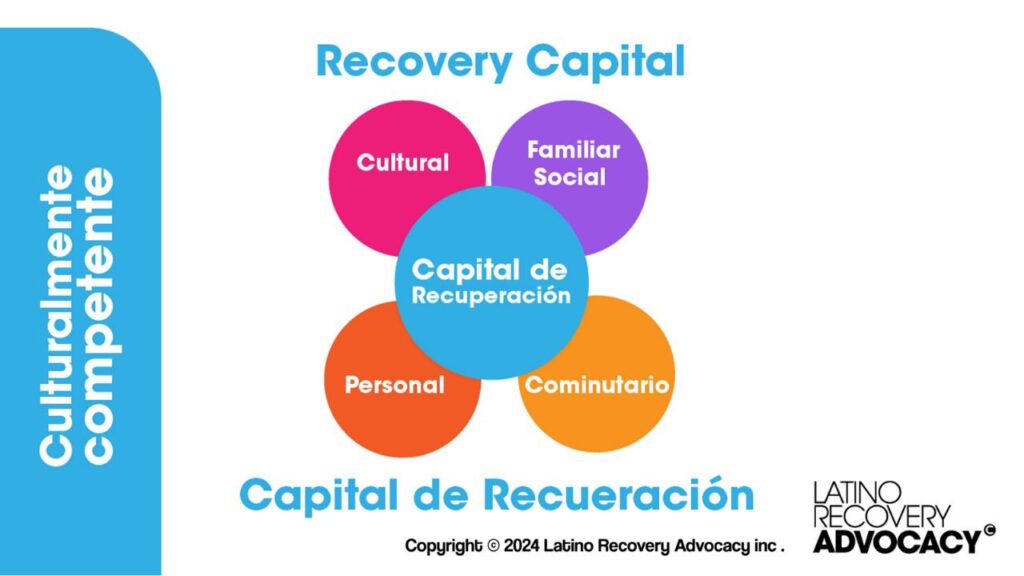
El capital de recuperación hace referencia al conjunto de recursos personales, familiares, sociales y comunitarios que una persona puede utilizar para iniciar y mantener su proceso de recuperación. Los ecosistemas de recuperación, por su parte, promueven la colaboración entre organizaciones, líderes comunitarios, proveedores de servicios, familias y personas con experiencia vivida para construir entornos que favorezcan la salud, la inclusión y la recuperación a largo plazo.

Estos enfoques han demostrado ser altamente efectivos en los Estados Unidos, donde han contribuido a fortalecer comunidades, aumentar el acceso a servicios de apoyo, mejorar los resultados de recuperación y reducir las barreras que históricamente han limitado el acceso a la ayuda. Además, han generado beneficios sociales y económicos al promover comunidades más saludables, resilientes y conectadas.

A medida que la ciencia de la recuperación continúa avanzando, resulta esencial seguir promoviendo políticas, programas y prácticas que reconozcan la dignidad de las personas, reduzcan las disparidades y fortalezcan las estructuras comunitarias que hacen posible una recuperación sostenible. Invertir en el desarrollo del capital de recuperación y en la construcción de ecosistemas de apoyo no solo beneficia a las personas en recuperación, sino también a sus familias y a toda la comunidad.

Angelo Lagares

Director ejecutivo LARA

LARA En Espanol

Casino Licence Check: A Step By Step Guide for UK Players

Casino Licence Check: A Step By Step Guide for UK Players

Why the Licence Check Comes Before the First Deposit

Every legitimate online casino operating in the United Kingdom must hold a licence from the Gambling Commission. This is not a marketing nicety; it is a legal requirement under the Gambling Act 2005. Any site accepting UK players without that licence is trading unlawfully, and your money and personal data sit outside the protections the regulator enforces. Read more about this at deposit 5 get 200 free spins uk.

The numbers make the stakes clear. The Gambling Commission supervises more than 3,000 operators and individual licences across Great Britain, and its enforcement record is far from symbolic. In recent years the regulator has issued financial penalties and settlements running into tens of millions of pounds against operators who failed on social responsibility or anti-money laundering duties. A licence check is how you confirm the brand in front of you answers to that regime.

Licensed operators must ring-fence customer funds, submit to regular compliance audits, and join a dispute resolution scheme. Unlicensed sites offer none of this. When a dispute arises over a withheld withdrawal, you have no regulator to escalate to and no adjudicator to hear your case. Checking first takes minutes; skipping it can cost far more.

The Step By Step Check

Step 1: Locate the Licence Information

Scroll to the footer of the casino’s homepage. Licensed operators display their Gambling Commission account number, usually alongside a logo linking to the regulator’s public register. The reference is typically a six or seven-digit number. If you cannot find it within a minute of looking, treat that as a warning sign rather than an oversight.

Step 2: Verify on the Public Register

Go directly to the Gambling Commission’s register and search the number. Do not click through from the casino’s own site; type the regulator’s address yourself. The result should show the trading name, the domain you are visiting, and the activities the licence covers, including remote casino games and sports betting where applicable.

Step 3: Match the Details

Cross-check three things: the domain listed matches the site you are on, the trading name matches the branding, and the licence status reads “active”. A common trick is a licensed brand’s number displayed on an unaffiliated copycat domain. If the register lists a different web address, walk away.

Step 4: Check Deposits and Withdrawals

Confirm the site offers sterling accounts and familiar UK payment methods such as debit cards, PayPal, and Paysafe. Licensed operators must also display clear terms on withdrawal times and identity verification, which is required before your first cash-out under UK anti-money laundering rules.

Step 5: Confirm Player Protections

A valid licence means access to deposit limits, time-outs, self-exclusion via GAMSTOP, and escalation through an alternative dispute resolution provider. Look for these tools in the account settings. Their presence, clearly signposted, is a practical signal that the licence is being honoured rather than merely displayed.

Red Flags and What to Do Next

Be wary of sites advertising “no verification” withdrawals, Curacao-only licensing aimed at UK players, or bonus terms that hide the operator’s registered company. Any casino accepting UK customers without a Gambling Commission reference is outside the regulated market, whatever its design suggests.

One practical note: offers quoted properly always carry the 18+ restriction and full terms. A reputable site, such as those featured in the Bitcoin Free Spins offer listings, will state wagering requirements, maximum bet rules, and expiry dates before you deposit a penny. Vagueness here often points to a licence problem elsewhere.

If you suspect an unlicensed operator, report it to the Gambling Commission through its website. Keep records of deposits and correspondence. And if gambling stops being fun, use GAMSTOP or contact GamCare on 0808 8020 133 , help is free, confidential, and available every day.

Slot Game Guides: Mastering Paylines for UK Players

Slot Game Guides: Mastering Paylines for UK Players

How Paylines Actually Work on Modern Slots

Paylines are the invisible routes across a reel set that determine whether a spin wins or loses. On a classic three-reel game you might find a single horizontal line running through the middle. On a five-reel video slot, the number can climb to 243, 1,024, or even 117,649 ways to win. The difference matters enormously for how you budget a session. Read more about this at fast withdrawal casinos.

Traditional fixed paylines require you to stake a set amount per line. A 20-payline game at 10p per line costs £2.00 per spin. If you drop to five lines, the same spin costs 50p, but you only win when symbols land on those five active routes. Every inactive line is a potential win you have given up.

Modern “ways to win” slots work differently. Instead of defined lines, any adjacent matching symbols from left to right count as a win. These games typically pay on 243 to 1,024 ways as standard, and the full stake is usually applied across all of them. There is no line selection to manage, which simplifies things but removes some cost control.

Scatter symbols usually pay regardless of paylines, and many slots now include cluster pays or expanding wild mechanics that bypass the line structure entirely. Understanding which model a game uses before you spin is the single most useful habit you can build.

Choosing Line Counts and Stakes Sensibly

The most common mistake among UK players is reducing active paylines to stretch a bankroll. It feels efficient, but it lowers your chances of triggering the wins the game was designed around. Industry tracking consistently shows that slots return between 92% and 97% over millions of spins, and that figure assumes all lines are active.

A practical rule: set your total spin cost first, then let the game divide it. If you want to play at £1.00 per spin on a 25-line slot, that is 4p per line. Reducing to ten lines to keep the same £1.00 stake means you are paying 10p per line for a fraction of the coverage. Neither approach is wrong, but the maths should be deliberate.

Volatility matters just as much as line count. High-volatility games with many paylines can go 100 or more spins without a meaningful return. Low-volatility titles pay smaller amounts more frequently. Match the profile to your session length rather than chasing a single big hit.

  • Check the paytable before spinning , it lists every line pattern and symbol value
  • Confirm whether the game uses fixed lines or selectable lines
  • Note the maximum win cap, often 5,000x to 50,000x stake
  • Test the demo version first if you are unfamiliar with the mechanic

Reading Paytables and Line Patterns Like a Regular

Every regulated slot in the United Kingdom must display its return-to-player percentage and rules. Take thirty seconds to open the paytable. Look for how many paylines exist, whether they pay left-to-right only or both ways, and what the wild symbol substitutes for. Games paying both ways effectively double your winning routes without changing the stake.

Line patterns on 20 to 50-line slots often include diagonals, V-shapes, and zigzags. A symbol landing on reel one and reel five but nowhere between wins nothing on a standard line game. This is why wild symbols and stacked symbols carry real weight , they bridge gaps that would otherwise break a route.

Game Type Typical Paylines Stake Control
Classic 3-reel 1-5 Line selection available
Video slot 20-50 Adjustable lines and coin size
Ways to win 243-1,024+ Total stake only
Megaways Up to 117,649 Total stake only

Finally, treat paylines as one part of a wider session plan. Set a loss limit before you start, keep stakes within a range you would be comfortable losing, and use deposit limits offered by licensed operators. Mastery of paylines is about understanding the mechanics, not about outsmarting a random number generator. Play for entertainment, stay within budget, and the guides will do the rest.

Importancia de reconocer el TDAH como factor de vulnerabilidad en el consumo y tratamiento de sustancias


La evidencia científica ha demostrado que las personas con Trastorno por Déficit de Atención e Hiperactividad (TDAH) presentan una mayor vulnerabilidad frente al consumo de sustancias psicoactivas. Diversas investigaciones señalan que características como la impulsividad, la dificultad para regular las emociones y la tendencia a buscar estimulación aumentan el riesgo de iniciar y mantener conductas de consumo. Además, se ha observado que cuando el TDAH no es tratado adecuadamente, pueden surgir complicaciones en la adherencia al tratamiento, una mayor probabilidad de recaída y comorbilidades emocionales que dificultan la recuperación. Por ello, reconocer esta relación desde un enfoque clínico integral resulta fundamental para diseñar intervenciones más efectivas y ajustadas a las necesidades de cada persona.

Además, la evidencia científica destaca la importancia de considerar los múltiples factores que intervienen en la relación entre el TDAH y el consumo de sustancias, dado que este trastorno puede influir significativamente en la adherencia, el curso y los resultados del tratamiento. Diversos estudios han señalado que comprender estos aspectos desde una perspectiva clínica integral permite diseñar intervenciones más ajustadas a las necesidades individuales, favoreciendo una recuperación más efectiva y sostenible.

1. Mayor riesgo de recaída
• El TDAH no tratado suele provocar impulsividad, desorganización y dificultad para mantener rutinas, lo cual aumenta la probabilidad de volver al consumo.
• Las personas con TDAH tienden a buscar alivio rápido a su malestar interno (ansiedad, frustración, aburrimiento), y las sustancias pueden ser usadas como una forma de automedicación.

2. Dificultades en la adherencia al tratamiento
• Un paciente con TDAH puede tener problemas para seguir indicaciones, llegar a tiempo a citas, tomar medicación adecuadamente o completar programas terapéuticos.
• Si el equipo clínico no reconoce esto como parte del trastorno, puede atribuir erróneamente estos comportamientos a falta de motivación o resistencia al tratamiento

3. Evaluación clínica incompleta o errónea
• Ignorar el TDAH puede llevar a que los síntomas cognitivos o conductuales se interpreten solo como efectos del consumo, lo que dificulta un diagnóstico integral.
• Esto puede hacer que el tratamiento se enfoque solo en la adicción, sin abordar las causas subyacentes que la perpetúan.

4. Mayor comorbilidad emocional
• El TDAH no tratado suele estar acompañado de ansiedad, depresión o baja autoestima.
• Estas condiciones emocionales, sin atención adecuada, pueden obstaculizar la motivación y el compromiso con la recuperación.

5. Resultados terapéuticos menos efectivos
• Las estrategias tradicionales de tratamiento de adicciones pueden ser menos efectivas si no se adaptan a las necesidades cognitivas y emocionales de una persona con TDAH.
• La intervención debería incluir técnicas de organización, regulación emocional, atención plena y terapia cognitivo-conductual adaptada al TDAH.

6. Impacto en la calidad de vida y reintegración social
• El TDAH no tratado puede afectar el desempeño laboral, las relaciones interpersonales y la capacidad de mantener estabilidad en la vida cotidiana, incluso si la persona está abstinente.
• Esto puede generar frustración y riesgo de recaída por sentirse incapaz de avanzar, aun estando en recuperación.

Guía Para el Bienestar en las Festividades Navideñas

En estos días de celebraciones navideñas, es fundamental elaborar un plan de bienestar y acción para afrontar los desafíos que suelen surgir durante estas festividades. La Navidad es una época de alegría, encuentros familiares y tradiciones, pero también puede ser un periodo emocionalmente intenso, en el que surgen sentimientos encontrados como la nostalgia, la tristeza, o el estrés por las responsabilidades sociales y económicas. Además, el consumo excesivo de alcohol y otras sustancias es común en estas celebraciones, lo que puede convertirse en un riesgo significativo para quienes están en proceso de recuperación o enfrentan desafíos relacionados con su bienestar emocional y físico.

Tener un plan claro y consciente nos permitirá disfrutar de estas fechas sin comprometer nuestro bienestar. Este plan debe incluir estrategias para manejar emociones intensas, evitar situaciones de riesgo, y mantenernos enfocados en nuestros objetivos personales. Por ejemplo, podemos identificar con anticipación las actividades o reuniones que podrían representar un desafío y desarrollar alternativas saludables para enfrentarlas. También es útil rodearnos de personas que apoyen nuestro bienestar, establecer límites claros, y practicar técnicas de manejo del estrés, como la meditación, el ejercicio físico, o simplemente dedicar tiempo a reflexionar sobre lo que realmente nos brinda alegría y paz en estas fechas.

La clave es recordar que cuidar de nosotros mismos es una prioridad, incluso en medio de las festividades. Al mantenernos atentos a nuestras necesidades y actuar con intención, podemos disfrutar la Navidad de manera significativa y proteger nuestro equilibrio emocional, físico y espiritual. Celebrar no significa abandonar nuestros principios ni comprometer nuestro progreso; al contrario, puede ser una oportunidad para reafirmar nuestro compromiso con nuestro bienestar y crecimiento personal.

Recovery Capital

Capital de Recuperación

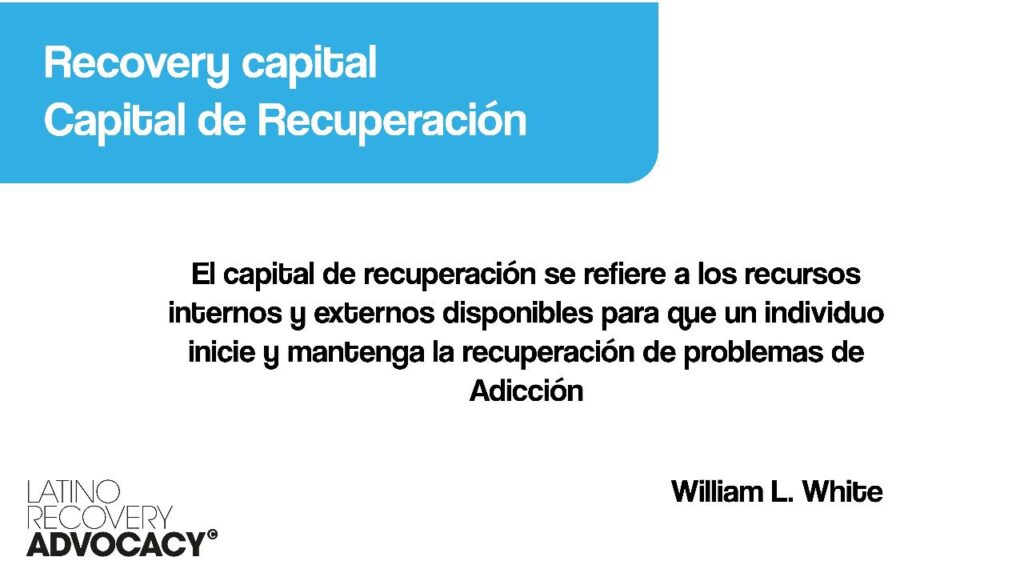
Según los originadores, William Cloud y Robert Granfield, el Capital de Recuperación se refiere a “la amplitud y profundidad de los recursos internos y externos que se pueden utilizar para iniciar y mantener la recuperación” del trastorno por uso de sustancias. El trabajo de William White destacó la importancia del Capital de Recuperación al resaltar la idea de que los procesos terapéuticos en el tratamiento de adicciones deben abarcar más que una intervención estrictamente clínica. Las estrategias que se dirigen al capital de recuperación familiar y comunitario pueden mejorar los resultados de recuperación a largo plazo, así como la calidad de vida de las personas y familias en recuperación a largo plazo.

El marco del Capital de Recuperación continúa evolucionando hoy en día, destacando la idea de que, según el Instituto de Investigación de Recuperación (RRI), existen múltiples caminos hacia la recuperación. LARA En Español Sure, diferentes caminos a la Recuperación:

▪ Vías clínicas (procesos de recuperación asistidos por los servicios de un proveedor de atención médica, clínico u otro profesional acreditado),
▪ Vías no clínicas (procesos de recuperación que no involucran a un clínico capacitado, pero que a menudo son comunitarios y utilizan el apoyo de pares), y
▪ Vías de autogestión (procesos de recuperación que no implican servicios formales, a veces denominados “recuperación natural”). Recuperación definida: un proceso de cambio mediante el cual las personas mejoran su salud y bienestar, viven una vida autodirigida y se esfuerzan por alcanzar su máximo potencial. La recuperación es más que simplemente abstinencia de alcohol y otras drogas.
Las cuatro dimensiones principales que apoyan una vida según SAMHSA son:

  1. Salud, definida como superar o manejar la(s) enfermedad(es) o síntomas mediante la toma de decisiones informadas y saludables que apoyen el bienestar físico y emocional.
  2. Hogar, definido como tener un lugar seguro y estable para vivir.
  3. Propósito, definido como la realización de actividades diarias significativas, como un trabajo, estudios, voluntariado, cuidado de la familia o actividades creativas. Tener la independencia, los ingresos y los recursos para participar en la sociedad.
  4. Comunidad, tener relaciones y redes sociales que brinden apoyo, amistad, amor y esperanza.
    En esencia, el Capital de Recuperación es una hoja de ruta para construir y mantener la recuperación más allá del acceso a las intervenciones de tratamiento agudo. Es un concepto para educar, evaluar y medir el progreso de los individuos con cualquier punto de entrada a las diversas vías de recuperación. Puede ser utilizado como el eje central de la planificación del cuidado en los niveles clínico, de entrenador de recuperación o de apoyo entre pares. Por lo tanto, el Capital de Recuperación puede aplicarse como una herramienta de evaluación de mejores prácticas para rastrear el progreso y los resultados del cuidado desde cualquier punto en el continuo de recuperación a través de un viaje de recuperación de varios años hacia la salud, el bienestar y una mayor calidad de vida percibida.

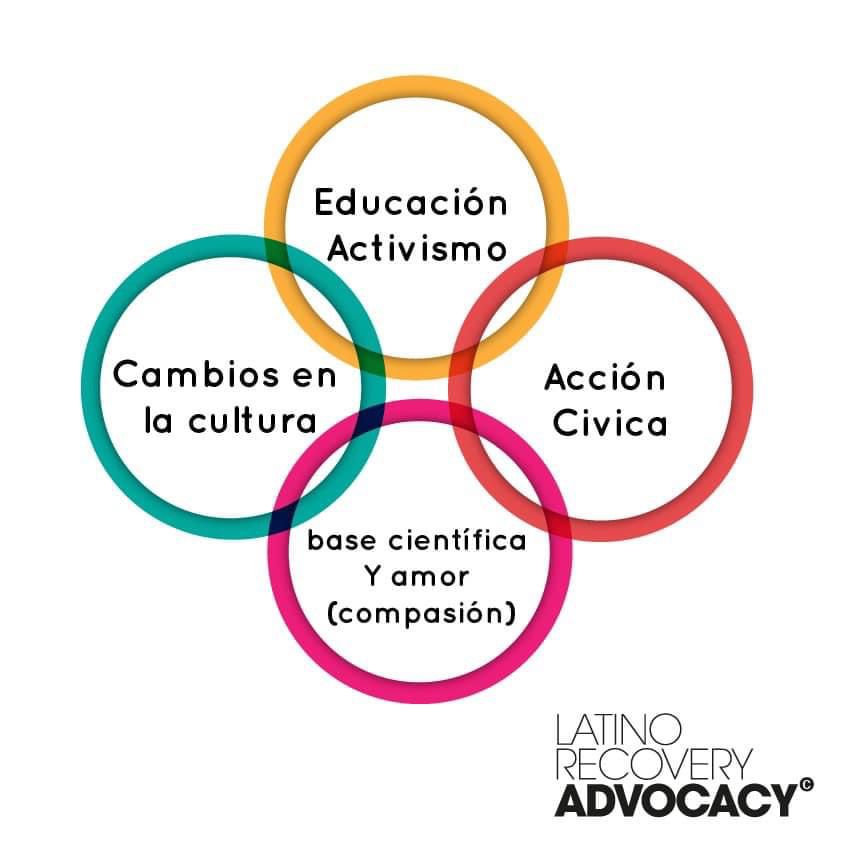
La necesidad de un cambio de paradigma en Salud Mental

La evolución en nuestra comprensión de la salud mental y las adicciones ha llevado a una reflexión crítica sobre las estrategias de prevención y tratamiento utilizadas en las últimas décadas. La evidencia, destacada por las crisis de opiáceos y epidemias de crack que se han salido de control en los últimos 50 años, sugiere que las tácticas previas no han sido las más efectivas. Las guerras contra las drogas, que en su momento se presentaron como soluciones contundentes, han demostrado ser un fracaso sociopolítico. En lugar de abordar las raíces del problema, estas medidas punitivas han exacerbado las consecuencias sociales y de salud asociadas con la adicción. Este reconocimiento ha llevado a la conclusión de que necesitamos cambiar hacia sistemas más compasivos y científicos que se centren en la prevención y el tratamiento basados en la evidencia. Este cambio no solo es esencial para abordar la actual crisis, sino también para sentar las bases de un enfoque más humano y efectivo en el manejo de la salud mental y las adicciones en el futuro.

Angelo Lagares